Australian 15-year-olds have recorded their lowest-ever reading and maths scores in the PISA tests, extending a two-decade decline, while science improved slightly on the previous cycle. The OECD released the results on Tuesday, and the Australian Council for Educational Research (ACER), which runs PISA in Australia, published the national report the same day. Of the 91 countries and economies that sat the test, Australia ranked 10th in reading and science and 16th in maths, on ABC News’ reading of the tables, and the country stays above the OECD average in all three domains.
The Numbers
Australian reading and maths results have been sliding for two decades, and this round has taken both to their lowest levels on record. On the ABC’s analysis of the report, applying the OECD’s rough rule that 20 points equals about a year of learning, reading is about two years behind its 2000 level, maths just over two years behind 2003, and science almost a year behind 2006.
Australia performed well in the new domain for this cycle, “Learning in the digital world”, with a mean score of 532 against an OECD average of 500 and 75 per cent of students at the national proficient standard. Science was the only one of the three established domains to improve, up slightly on the 2022 results.
The Classroom Data
The report also carries background data on the conditions students learn in, and on several of those measures Australia sits near the bottom of the field. The country ranked 69th of 80 on disciplinary climate. 21 per cent of students said they could not work well in most or all lessons, against the OECD’s 19 per cent, and 41 per cent reported noise and disorder, against the OECD’s 31 per cent. On attendance, 44 per cent had skipped a school day in the previous fortnight, against the OECD’s 24 per cent, ABC News reports.
The Reaction
Education Minister Jason Clare said: “This shows why the reforms we are rolling out are so important.” The results point to the need to wind back the amount of screen time in schools, he said.
ACER’s Jonas Bertling said the country had “stabilised our scores in science”, and that while there had been some declines in the long run, “we’re still a very strong country”. Disruption “remains a challenge in our Australian classrooms”, he said. The Centre for Independent Studies’ Blaise Joseph called the long-term trend troubling, and pointed to fewer high performers and more low performers in all three subjects. Coverage of the release ran in the ABC, The Guardian, the mastheads and the wires.
From One School
At Gymea Technology High School, Year 10 student James Casey described the new digital-world test as “a test of just pure logic and reason”. Principal Katherine Edwards linked the skills the test measures to future jobs, in comments carried by ABC News.
The Years Behind the Slide
The state of play after the release is mixed. Australia has its lowest-ever reading and maths scores, a small gain in science, a ranking that stays above the OECD average, and a disruption and absence picture that no curriculum change alone fixes. The reforms the minister points to are still rolling out, the debate over what should change next stays open, and the next set of results is where the question will be answered.
Sources: Australian Council for Educational Research, Australia’s PISA 2025 national report, 8 September 2026; ABC News, “Australian students record worst-ever reading and maths results in PISA testing”, 8 September 2026; The Guardian, “Australia’s classroom disruption among worst in world, prompting calls for a ‘digital detox'”, 8 September 2026
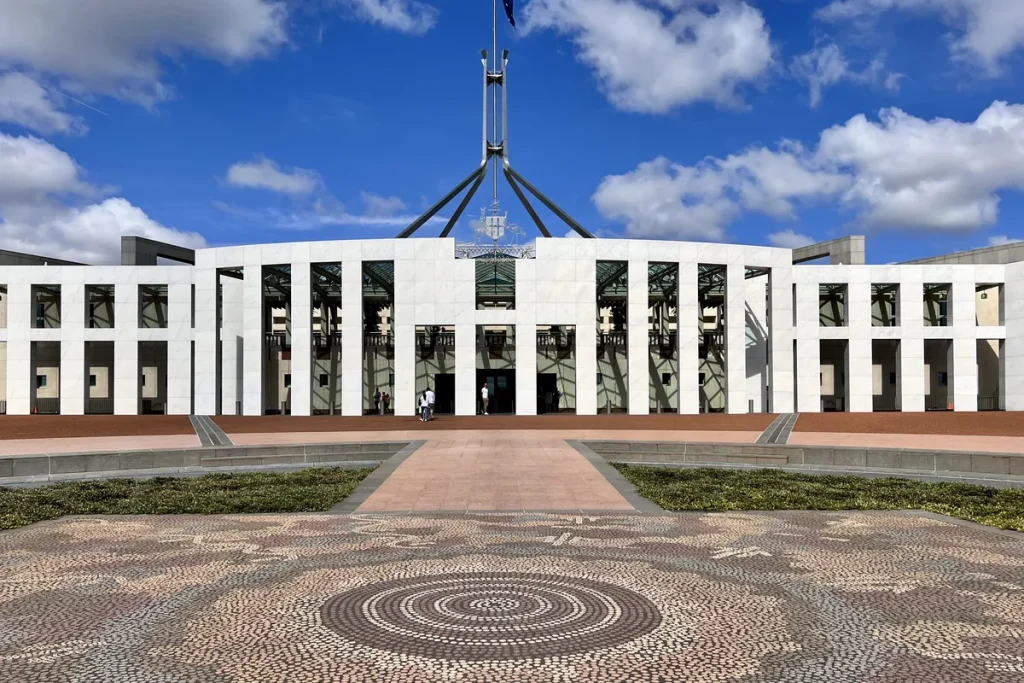
Photo: Philip Terry Graham, CC BY 2.0, via Wikimedia Commons.
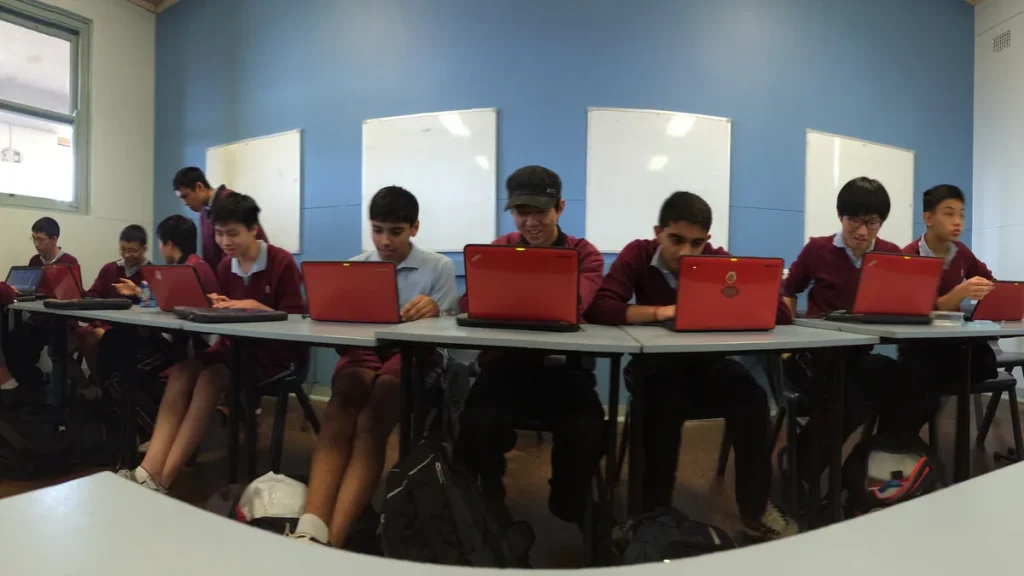
Illustrative: students at Sydney Technical High School in New South Wales. The photograph is not from the PISA 2025 testing.