A proposal to turn the South Atlantic into a whale sanctuary has been defeated again at the International Whaling Commission, this time at the commission’s 70th meeting, held in Hobart. Thirty-nine countries voted for it, 18 voted against and three abstained. That fell short of the three-quarters majority a change of this kind needs. The meeting, held in the commission’s 80th year, did agree on something else: a “Hobart Declaration”, adopted by consensus, along with resolutions on ship strikes and the fish maw trade.
The Vote
Brazil brought the proposal to Hobart. It covered 21 million square kilometres of ocean, running from the equator to Antarctica, the ABC reported. According to dpa, the measure fell four votes short of the majority it required.
Argentina, Brazil and Uruguay first put the plan forward in the late 1990s, dpa reported, and it has failed before. Had it passed this time, the South Atlantic would have become the world’s third whale sanctuary, after the Antarctic and the Indian Ocean.
Who Stood Against It
Countries including Norway, Ivory Coast and several Caribbean states opposed the sanctuary, dpa reported.
The representative for Antigua and Barbuda went further than voting no, and called on Brazil to drop the plan altogether. “We think it is time for the proponent of this scheduled amendment to seriously consider its permanent withdrawal until we can assess issues in paragraph 10e,” the representative said, as reported by the ABC.
Norway, Iceland and Japan continue to hunt whales, the ABC reported. Japan is no longer in the commission; it left the IWC in 2019, according to dpa.
What Hobart Did Agree
About 300 delegates from more than 60 countries attended, dpa reported, and they reached agreement on the Hobart Declaration without a vote.
The declaration marks 80 years of the whaling convention. It records the recovery of some whale populations under the 1986 moratorium on commercial whaling, and it notes the threats whales still face, including ship strikes, noise and entanglement in nets, the ABC reported. Australia has had its own entanglement cases: last year, a humpback caught in a shark net off Kirra had to be rescued.
The commission is chaired by Australian Antarctic scientist Nick Gales, which put an Australian in the chair at an Australian-hosted meeting. Dr Gales spoke to the ABC about the declaration.
“It is a really important declaration. It is the first time the IWC has been able to reach across the policy divide and make a common, single-voice declaration, so it is really quite an important thing in my view,” he said.
Matt Collis, of the International Fund for Animal Welfare, also pointed to the way it was adopted. “It was passed by consensus, which is some achievement in the International Whaling Commission considering the divergent views here,” he told the ABC.
The meeting also backed resolutions on ship strikes and on the fish maw trade.
Brazil Will Ask Again
The Hobart result gave the sanctuary a majority of the votes cast, but not the three-quarters it needed.
Brazil’s delegate said the country would put the plan to every plenary until it passes, the ABC reported.
Sources: ABC News, “On its 80th birthday, International Whaling Commission encounters familiar impasses”, 3 October 2026 (https://www.abc.net.au/news/2026-10-03/international-whaling-commission-resolutions-in-hobart-meeting/107223122); BERNAMA (dpa), “South Atlantic Whale Sanctuary Bid Blocked Again”, 2 October 2026 (https://www.bernama.com/en/world/news.php?id=2614647)
Photo: Donald Hobern, CC BY 2.0, via Wikimedia Commons.
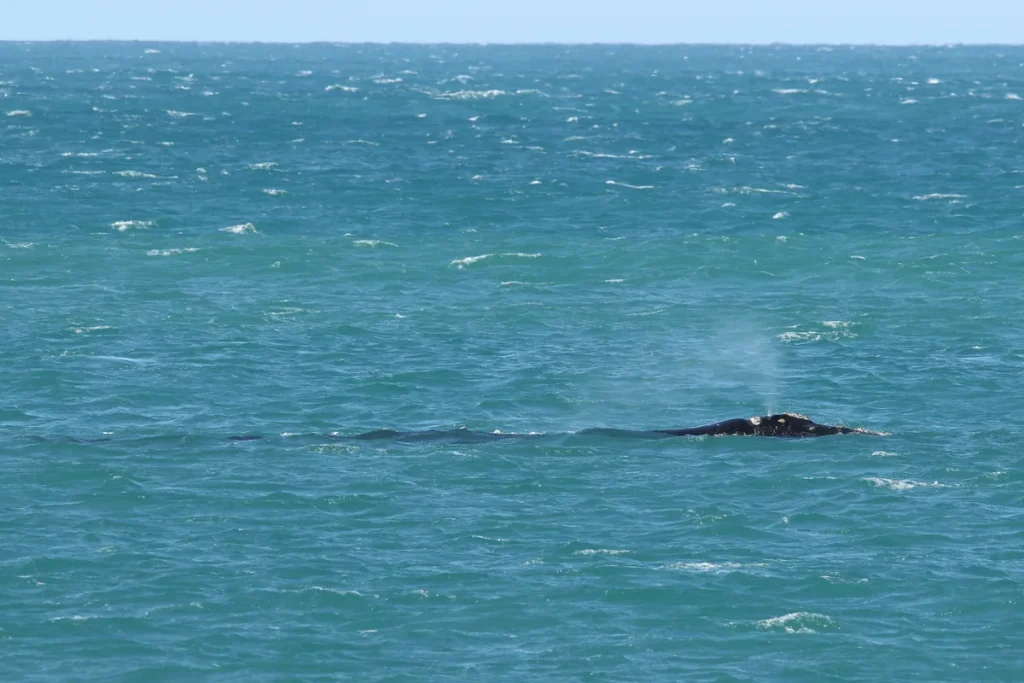
A southern right whale surfaces off Port Elliot, South Australia, in August 2018. The International Whaling Commission met in Hobart in 2026; this photograph is not from the meeting.