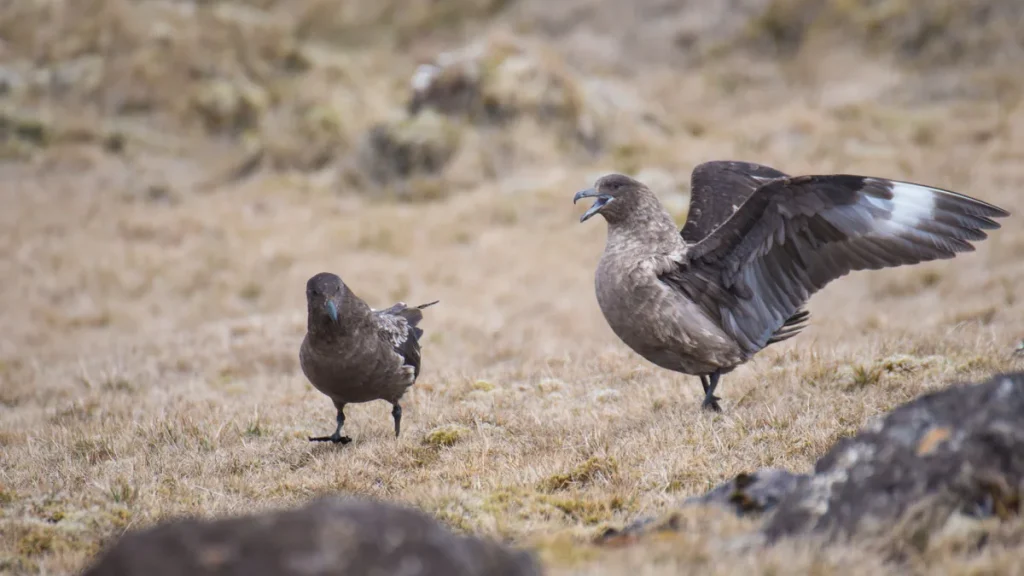
A brown skua found sick on a remote beach at Cape Le Grand National Park near Esperance has tested positive for highly pathogenic H5N1 avian influenza. The confirmation came overnight into Saturday and is the first mainland detection of the virus in Australia. A giant petrel found unwell at the same site also tested positive for H5, with further strain testing under way.
The detection
The skua, a sub-Antarctic species seldom seen on Western Australia’s south coast, was found on Sunday 14 June on a remote beach about 700 kilometres south-east of Perth. It was isolated and died that night. A WA laboratory returned a suspected positive on the Thursday, samples went overnight to CSIRO’s Australian Centre for Disease Preparedness, and that laboratory confirmed highly pathogenic H5N1. Authorities briefed the public on the suspected detection on Friday. Testing matches the strain found in Australia’s sub-Antarctic territories. A giant petrel found unwell at the same spot was also sampled; it has tested positive for H5, with further testing under way to establish its strain.
Why “mainland” matters
The WA Government’s statement calls the detection Australia’s first recorded case. Australia has recorded H5N1 before, but only in its sub-Antarctic territories, including Heard Island from October 2025. The Esperance bird is the first confirmed on the mainland itself.
What authorities said
WA Agriculture and Food Minister Jackie Jarvis said “Importantly, this shows that Australia and Western Australia’s preparedness measures have worked”. Members of the public who find sick or dead birds “should not handle the animals but should take photos or a video” and call the hotline, she said. Federal Agriculture Minister Julie Collins, speaking on Friday while the result was still suspected, described the detection as “a single migratory wild bird that was found sick in an isolated area in southern Western Australia”. “There is no evidence of mass mortality at this time, nor is there any evidence of any infection in poultry,” she said.
What it does not mean
No poultry detections have been found, and no other deaths have been reported at this time. Authorities say the risk to people who do not work directly with birds is low. The response remains surveillance rather than any quarantine declaration, and the case is being treated as a single wild bird, as the federal minister described it.
Expert and industry reaction
The Australian Veterinary Association confirmed the detection in its own statement. Michael Guerin of the National Farmers Federation said the confirmation would be stressful for farmers and communities, with the economic impact hard to assess. Carol Booth of the Invasive Species Council called it deeply concerning for wildlife and a critical test of preparedness.
What people should do
Keep wild birds away from flocks, feed and water. Clean pens and equipment, then wash hands. Do not handle sick or dead birds: photograph or film them from a safe distance and report the sighting to the Emergency Animal Disease Hotline on 1800 675 888. Report sick or dead marine mammals the same way. Information is at birdflu.gov.au.
The virus in context
H5N1 has caused mass seabird mortality internationally since 2021 and reached Antarctica in 2025. On Heard Island, the virus has been linked to thousands of seal deaths. Closer to home, wildlife along the coast has had its share of emergencies, including the humpback freed from a shark net off Kirra Beach. The Esperance result is the first time the strain has crossed to the mainland.
The Weeks Ahead
The confirmation is a first for the mainland, and the practical response has been stepped-up surveillance in the region. States, territories and industry have been convened, with national coordination running through the federal department. No poultry infection has been found. Authorities have declared no further measures, and nothing beyond what they have said should be read into the result.
Sources: Western Australian Government, “First case of H5 bird flu confirmed in Western Australia”, 20 June 2026; ABC News, “Suspected H5 bird flu detected in Australia”, 19 June 2026; Australian Veterinary Association, “Confirmation of H5 Avian Influenza in Western Australia”, 20 June 2026; Xinhua, “Australian gov’t confirms first mainland case of H5N1 bird flu”, 20 June 2026
Photo: Antoine Lamielle, CC BY-SA 4.0, via Wikimedia Commons.
Illustrative: brown skuas on Amsterdam Island in the French Southern and Antarctic Lands, photographed in 2021. This is not the bird involved in the Western Australian detection, a brown skua found near Esperance that became Australia’s first confirmed mainland H5N1 case in June 2026.