The Senate passed the federal government’s NDIS overhaul on Tuesday evening, with the Coalition voting for the bill alongside Labor after a deal between the two parties. The bill, the National Disability Insurance Scheme Amendment (Securing the NDIS for Future Generations) Bill 2026, now returns to the lower house, where it is expected to clear on Labor’s numbers.
The government put forward 63 amendments during the bill’s passage, which Minister for the NDIS Mark Butler said showed a government “willing to listen” after talks with the disability sector. The government announced a record round of NDIS provider bans on Monday, as the vote approached. The Coalition had tied its support to a fix for the unintended “widow tax” arising from the government’s negative gearing changes, and secured a promise to move quickly on it. ABC News reported that the arrangement also opens routes for Labor’s gambling reforms and its news media bargaining incentive.
What the Bill Does
Eligibility will rest on standardised functional-capacity testing rather than diagnosis alone, and the standards for those assessments are to be published well before they take effect on 1 January 2028. The bill also adds protections for high-risk participants: people who need round-the-clock care gain an escalation route, and can seek a variation to their plan rather than lose the supports they hold.
The anti-fraud package adds criminal and civil penalties for providers who give or offer kickbacks, whistleblower protections and wider enforcement powers for the National Disability Insurance Agency, measures aimed at sharp practice in the provider market.
The Money
The scheme runs above $50 billion a year, and the changes are projected to save about $37.8 billion over four years, on the government’s figures as reported by ABC News. The government’s stated aim, set out in the second reading and not written into the bill, is to bring participants from about 760,000 to 600,000 by 2030. The Guardian reported that more than 240,000 participants are expected to move to new arrangements.
The Reaction
The disability sector is split. Inclusion Australia engaged with the changes, while other organisations said they had come too far, too fast. The Greens opposed the bill. Greens senator Jordon Steele-John said Labor and the Liberals “have decided to strip us of our rights regardless of our safety or dignity”. Social Services Minister Emma McAllister said the changes deliver “a NDIS that is strong, safe and sustainable”.
What Changes, and When
Butler conceded that substantial work remains on foundational supports for children over eight and for adults leaving the scheme. Thriving Kids will start on 1 October even though Queensland has not signed on, and Butler said the states had more work to do. He also put them on notice over hospital funding, calling it “a question of honour”.
One vote remains, in the lower house, where the government expects the bill to pass. The new assessment standards are due to be published before the system starts in 2028. The savings are projected rather than banked, and the foundational supports remain unresolved.
Sources: Minister for the NDIS, “Legislation to secure the future of the NDIS passed by the Senate”, 18 August 2026; ABC News, “Controversial changes to NDIS will pass after Labor strikes deal with Coalition”, 18 August 2026; The Guardian, “Controversial NDIS bill passes Senate with ‘substantial’ amendments as Labor and Coalition strike deal”, 18 August 2026
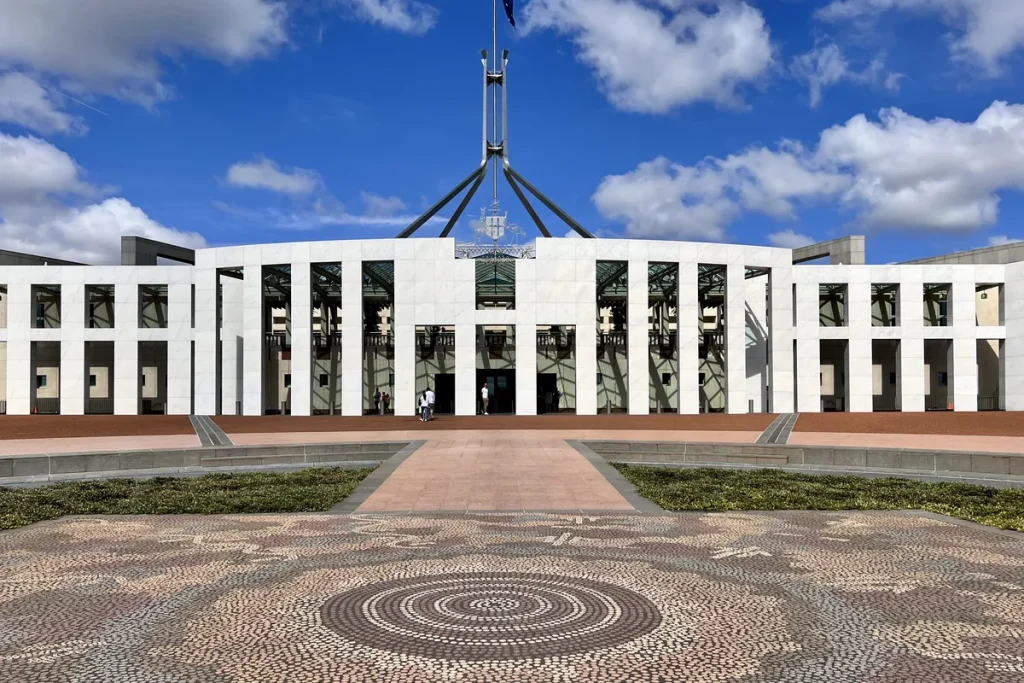
Photo: Kgbo, CC BY-SA 4.0, via Wikimedia Commons.
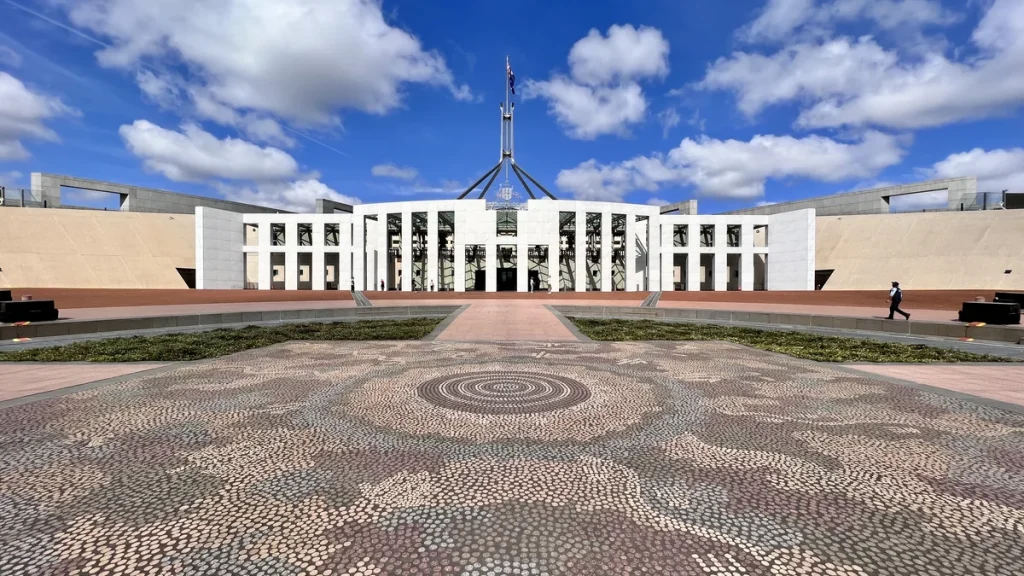
Parliament House in Canberra, photographed in March 2022. The Senate passed the National Disability Insurance Scheme Amendment (Securing the NDIS for Future Generations) Bill 2026 there on the evening of 18 August 2026.