Chief of the Defence Force Admiral Mark Hammond told a Senate estimates hearing on Thursday 29 October that Defence had completed its response to a long-secret inquiry into the culture and command of the SAS during the war in Afghanistan.
The Sydney Morning Herald reported that he ruled out further action against senior commanders.
Hammond at Estimates
“Those findings and recommendations were actioned by my predecessors. All departmental actions relevant to that inquiry have been completed,” Hammond said, according to the Herald.
“Referrals were made where necessary to government, and I have no additional testimony to add to that of my predecessors.”
Under questioning from the Greens’ David Shoebridge, Hammond agreed the report identified “serious failures here that need to be addressed”, the Herald reported. He said recommendations for change had already been made by past ADF chiefs.
What the SAS Inquiry Found
The inquiry found the chain of command had been effectively inverted, with junior officers “effectively subservient” to non-commissioned officers, ABC News reported.
It found “an absence of effective leadership at various levels”, and a belief among some operators that they were “exceptional”, according to the ABC.
The report referred to a closed culture “described by some as akin to a ‘bikie gang'”, and to decisions influenced by “a desire to secure awards”, the ABC reported. It also noted a drinking venue at Camp Russell, despite orders against alcohol.
Data That Was Not Acted On
The inquiry found an “extreme limitation” in the flow of information to higher command, according to ABC News.
It also criticised higher headquarters for not acting on alarming data, such as rising enemy-killed figures alongside few wounded insurgents and few ADF casualties.
The inquiry said, as reported by the ABC: “Some commanders were alert to this data and rumours that accompanied it while others were not, which may suggest an abandonment of curiosity.”
“It is extraordinary that no effective action was taken given the gravity of the matters the subject of rumours,” it said.
The inquiry placed some of the blame on government and on Special Operations Command, for fostering a sense that the SAS was “superior” rather than “specialist”, ABC News reported. It also criticised over-deployment.
It commended reform efforts already under way, according to the ABC.
A Report Kept From View
The inquiry was commissioned after the 2020 Inspector-General of the ADF Afghanistan Inquiry found “credible evidence” of dozens of unlawful killings, ABC News reported. It was handed to the then chief, Mark Binskin, in 2022.
An executive summary was uploaded to the Inspector-General’s website on Tuesday 27 October and first published by The Australian, according to the Herald. Defence had twice refused to release it under freedom of information laws.
The full report remains secret because it contains sensitive evidence from the original inquiry, ABC News reported.
A Former SAS Captain Responds
Liberal MP Andrew Hastie, a former SAS captain, spoke about the report on Radio National Breakfast.
“I lived a lot of what I read in that report,” he said, according to ABC News.
On accountability, Hastie said, according to the Herald:
“In the end, if you hold a commission in the Australian Army, then you are accountable for those underneath you. Maybe not directly for actions, but certainly there’s moral accountability, moral responsibility.”
What the Report Does Not Say
The inquiry did not establish that senior commanders knew war crimes were being committed, the Herald reported.
The 2020 Brereton inquiry found credible evidence that Australian special forces unlawfully killed 39 Afghan civilians and prisoners, according to the Herald.
Ben Roberts-Smith and Oliver Schulz face war crimes charges, the Herald reported. Both have strongly denied the claims.
As at Thursday 29 October, Defence’s position, as Hammond put it at estimates, is that all departmental actions on the inquiry are complete.
Buzzline’s defence coverage includes Defence holding firm on the Victoria Barracks sale despite protests and Australia’s sanctions on North Korea’s fake IT worker networks.
More defence news is in Buzzline’s Defence & Security section.
Sources: ABC News, “Inquiry slams culture and command of Australia’s SAS during Afghanistan war”, 29 October 2026 (https://www.abc.net.au/news/2026-10-29/secret-inquiry-into-afghanistan-special-forces-slams-sas/107321098); The Sydney Morning Herald, “Military top brass to be spared from further Afghanistan war crimes action”, 29 October 2026 (https://www.smh.com.au/politics/federal/military-top-brass-to-be-spared-from-further-afghanistan-war-crimes-action-20261029-p619pl.html)
Photo: Nick-D, CC BY-SA 4.0, via Wikimedia Commons.
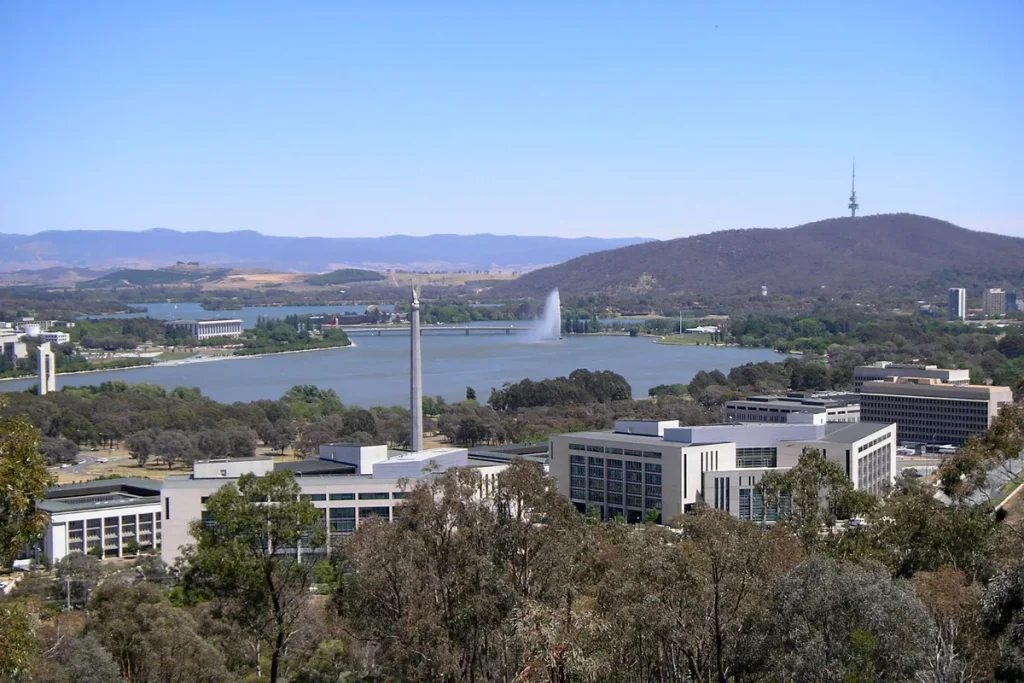
For illustration: Russell Offices, the Defence headquarters in Canberra, seen from Mount Pleasant in November 2006.